What becomes visible when property listings are compared on consistent assumptions?
Turn listings into comparable records
This project collects Berlin property listings, cleans their fields and evaluates them using a shared financial model. Basic search data can be enriched with more detailed exposé information before records are merged and deduplicated.
The pipeline calculates measures such as price per square metre, rental yields and projected cash flow. A consistent set of inputs makes the differences between properties easier to inspect than a collection of individual adverts.
Add a little neighbourhood curiosity
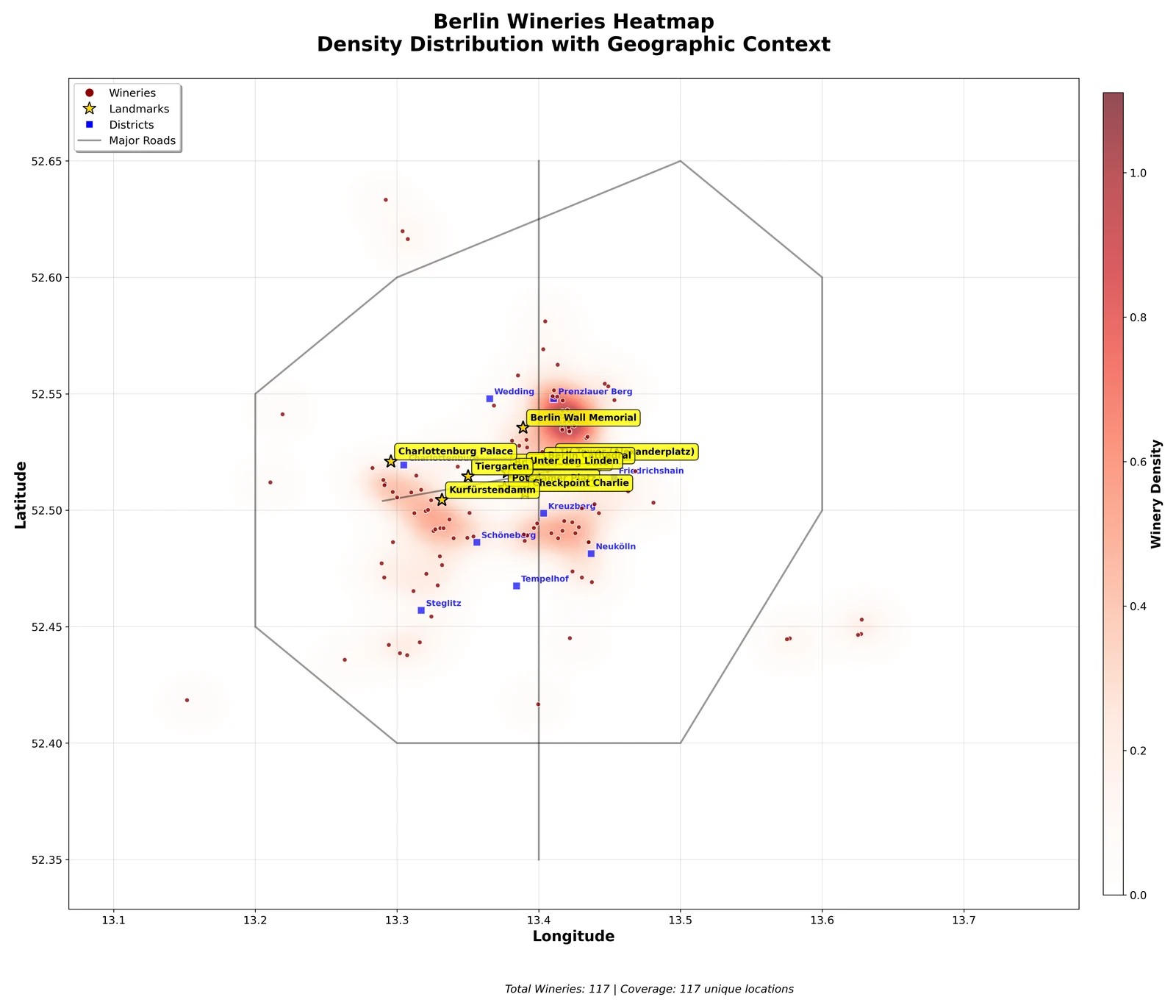
Alongside financial and property features, the project explores proximity to Berlin wine establishments as a lifestyle signal. Spatial indexing helps compare locations without repeatedly scanning every venue.
This makes the ranking deliberately inspectable: financing assumptions and personal preferences can affect the result in very different ways. A lifestyle score is an input to explore, not an objective measure of investment quality.
A snapshot, not the market
Saved analyses reflect the listings and assumptions used when they were produced. Asking prices are not transaction prices, and projected returns are model outputs rather than realised outcomes. The project is an exploration of data collection and comparison, with the code available to inspect those choices.